Awareness • Preparedness • Community Resilience

Fire Safety & Disaster Preparedness

Prevent • Prepare • Respond Responsibly • Build Resilient Communities

Fire Safety & Disaster Preparedness

Awareness • Preparedness • Community Resilience
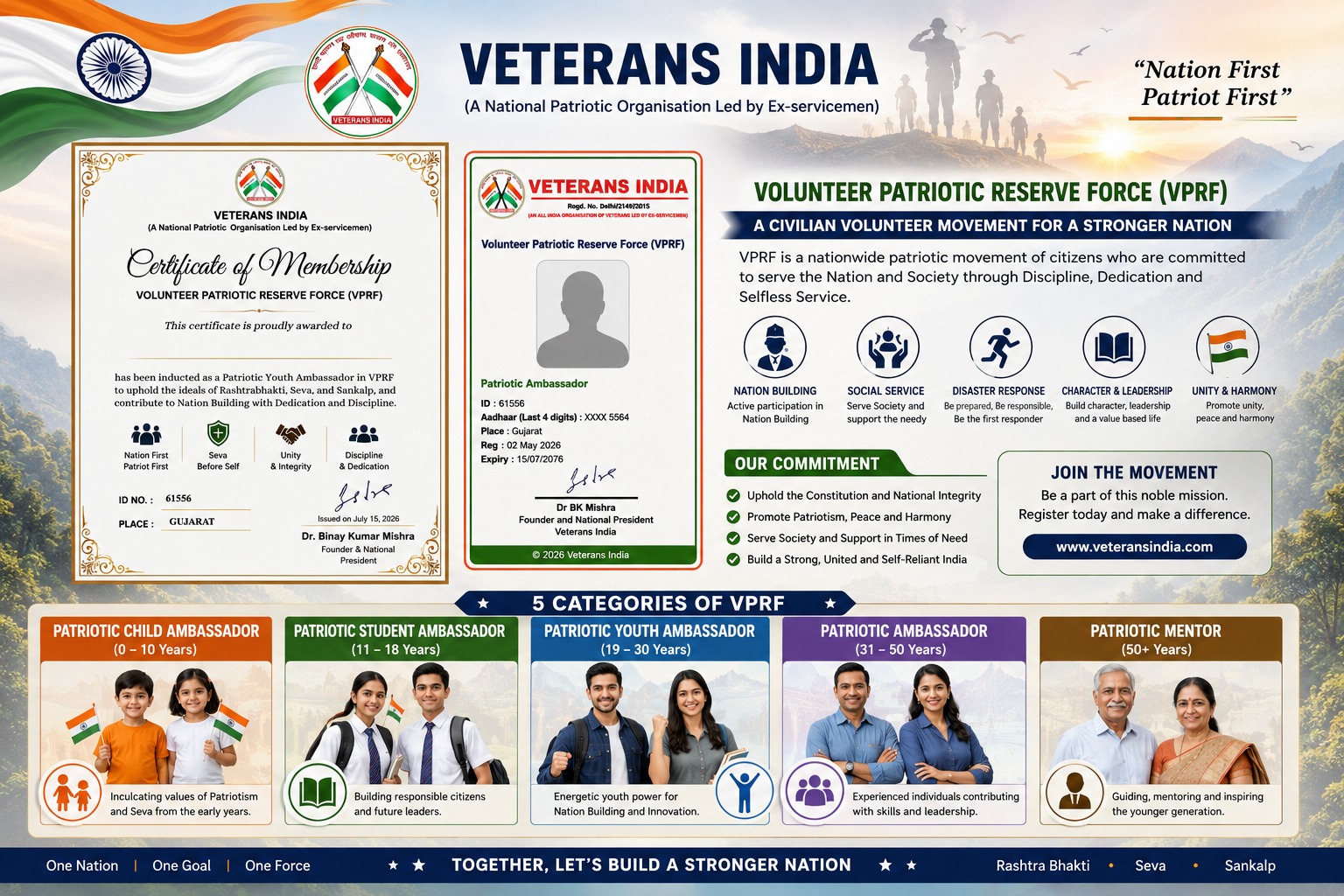
Veterans India Fire Safety and Disaster Preparedness

Awareness Before Emergency • Responsibility During Response

Veterans India promotes responsible awareness, preparedness and community resilience for fire safety, emergencies and disasters.

The objective is to help citizens, students, institutions and communities understand basic preventive practices, respond responsibly during emergencies and support authorised agencies without interfering with official command, rescue or enforcement functions.

Veterans India seeks to contribute through awareness, training support, veteran-led discipline, institutional preparedness and community participation.
Why Preparedness Matters

Emergencies can occur with little warning. Preparedness reduces confusion and supports safer, more responsible action.

Fire-Safety Awareness

Understanding common risks, prevention and safe behaviour.

Emergency Preparedness

Learning basic preparedness before an emergency occurs.

Evacuation Awareness

Understanding exits, assembly areas and responsible evacuation.

First-Response Awareness

Basic awareness until authorised emergency services take control.

Disaster-Risk Awareness

Understanding local risks and appropriate preparation.

Community Resilience

Building preparedness through informed community participation.

Institutional Preparedness

Improving readiness in schools, colleges, offices and communities.

Responsible Public Behaviour

Following verified guidance and avoiding actions that increase risk.

Our Approach

A prevention-and-preparedness model focused on awareness rather than unauthorised intervention.

Awareness
Prevention
Training
Preparedness
Responsible Response
Recovery Support
Know What to Do • Know What to Avoid

The purpose is to help people understand what they should do, what they should avoid, and when authorised emergency services must take control.

Fire Safety Awareness

Promoting prevention, evacuation awareness and responsible behaviour during fire emergencies.

Common causes of fire
Electrical safety
LPG and household safety
Workplace fire precautions
Safe use of electrical equipment
Fire-extinguisher awareness
Emergency exits
Evacuation procedures
Assembly points
Safe behaviour during fire emergencies
Demonstrations involving specialised equipment should be conducted only by trained and authorised personnel.

Emergency & Disaster Preparedness

Programmes should reflect local risks and applicable government guidance.

Earthquakes

Awareness of preparedness and safer response practices.

Floods

Preparedness, evacuation awareness and verified communication.

Cyclones

Risk awareness and responsible preparation.

Heatwaves

Preventive awareness and responsible community support.

Urban Emergencies

Awareness of safe conduct in urban emergency situations.

Fire Incidents

Prevention, evacuation and emergency-services awareness.

Community Evacuation

Understanding safe routes, assembly points and authorised instructions.

Emergency Communication

Using verified information and appropriate communication channels.

Institutional Preparedness

Schools, colleges, universities, offices, societies and other institutions can strengthen safety through proper planning.

Emergency plans
Exit-route awareness
Assembly points
Emergency contact systems
Role allocation
Safety signage
Mock-drill awareness
Student and employee sensitisation
Coordination with authorised agencies
Detailed Institutional Collaboration Remains Separate

Institutional partnership pathways should remain under the Institutions section of the website.

Role of Veterans

Veteran experience can strengthen awareness, planning, discipline and preparedness.

Veterans in Disaster Preparedness
Discipline
Planning
Team coordination
Situational awareness
Leadership
Crisis management
Communication
Preparedness
Veterans may support awareness, training coordination and mentoring within authorised programmes. Their role does not create any police, fire-service, disaster-command or government authority.

Youth & Volunteer Participation

Volunteers can support preparedness through awareness and authorised assistance within their training and role.

Awareness Campaigns

Promoting verified safety and preparedness information.

Safety Education

Supporting responsible awareness sessions and sensitisation.

Community Sensitisation

Helping communities understand basic preparedness.

Mock-Drill Support

Supporting authorised drills under appropriate supervision.

Emergency Information

Sharing verified information from authorised sources.

Support Vulnerable Persons

Assisting only under proper supervision and authorised conditions.

Community Documentation

Recording activities responsibly where appropriate.

Digital Communication

Using digital channels responsibly during preparedness activities.

Community Preparedness

Helping households and local groups understand basic preparedness and safe community response.

Emergency contact numbers
Basic preparedness kits
Exit routes
Safe assembly areas
Fire-prevention habits
Responsible evacuation
Assistance for elderly and vulnerable persons
Verified emergency information
Complement Official Systems

Community preparedness should complement—not replace—official disaster-management systems.

Training & Demonstrations

Practical sessions should be delivered only where qualified trainers and appropriate facilities are available.

Fire-Safety Awareness

Awareness of prevention, exits and emergency procedures.

Emergency-Preparedness Workshops

Structured awareness of local and institutional preparedness.

Evacuation Demonstrations

Authorised demonstrations of evacuation awareness and assembly procedures.

Mock-Drill Awareness

Helping participants understand the purpose and process of drills.

First-Aid Awareness

Basic awareness until qualified medical help arrives.

Institutional Safety Workshops

Preparedness awareness for schools, colleges, offices and communities.

Any technical or practical training involving risk should be delivered by appropriately qualified and authorised professionals.

First-Aid Awareness

Helping people understand responsible action until qualified medical assistance arrives.

Calling emergency services
Basic scene safety
Recognising emergencies
Bleeding awareness
Burns awareness
Heat-related emergencies
Basic casualty handling principles

Clinical Boundary

Veterans India volunteers should not provide clinical treatment unless they are appropriately qualified and authorised to do so.

Responsible Communication During Emergencies

Misinformation can increase confusion and risk during emergencies.

Share only verified information
Follow instructions of authorised agencies
Avoid rumours
Protect personal and sensitive information
Avoid obstructing emergency operations
Use social media responsibly

What Veterans India Volunteers Must Not Do

Volunteers must stay within their training, authorised role and the directions of competent authorities.

Enter restricted or hazardous zones without authorisation
Conduct rescue operations beyond their training
Interfere with police, fire, medical or disaster-management authorities
Operate specialised equipment without qualification
Represent themselves as government or emergency personnel
Collect unauthorised funds
Spread unverified emergency information
Undertake activities that create additional risk

Collaboration for Safer Communities

Building preparedness through qualified expertise, institutions and authorised collaboration.

Educational Institutions

Awareness and preparedness programmes for students and staff.

Resident Communities

Preparedness and safety awareness for local communities.

Corporates & Workplaces

Workplace safety awareness and preparedness support.

Qualified Safety Professionals

Technical and practical guidance through authorised experts.

Hospitals & Health Organisations

Appropriate health and emergency awareness support.

Training Institutions

Qualified training support and preparedness education.

Government-Authorised Agencies

Coordination with competent authorities where appropriate.

CSR Partners

Support for structured preparedness and community-benefit programmes.

Partnership Details Remain Under Partnerships

Detailed partnership opportunities should remain under the Partnerships section of the website.

Measuring Preparedness Impact

Moving from one-time awareness events towards stronger preparedness systems.

Participants Trained

Tracking the number of people completing approved awareness or training.

Institutions Covered

Recording participating schools, colleges, offices or communities.

Awareness Sessions

Documenting structured safety and preparedness sessions.

Mock Drills Supported

Recording authorised mock-drill awareness and support.

Safety Plans Developed

Tracking preparedness plans developed with appropriate stakeholders.

Trainers Involved

Documenting qualified trainers and experts contributing to programmes.

Follow-Up Actions

Tracking corrective and improvement actions after sessions.

Participant Feedback

Collecting structured feedback and lessons for improvement.

Current Authorised Training

Activate this section only when a genuine authorised training programme and functioning registration process exist.

Join Fire Safety & Disaster Preparedness

Register to participate, volunteer, mentor, coordinate an institutional programme, support training or explore an authorised CSR/community preparedness initiative.

Participation Options

  • Fire-safety awareness programmes.
  • Institutional and community preparedness.
  • Veteran mentoring and volunteer participation.
  • Authorised training and demonstration support.
  • Corporate and CSR-supported preparedness programmes.
  • First-aid and responsible emergency-awareness initiatives.